


Why Mars Feels Both Close and Impossible
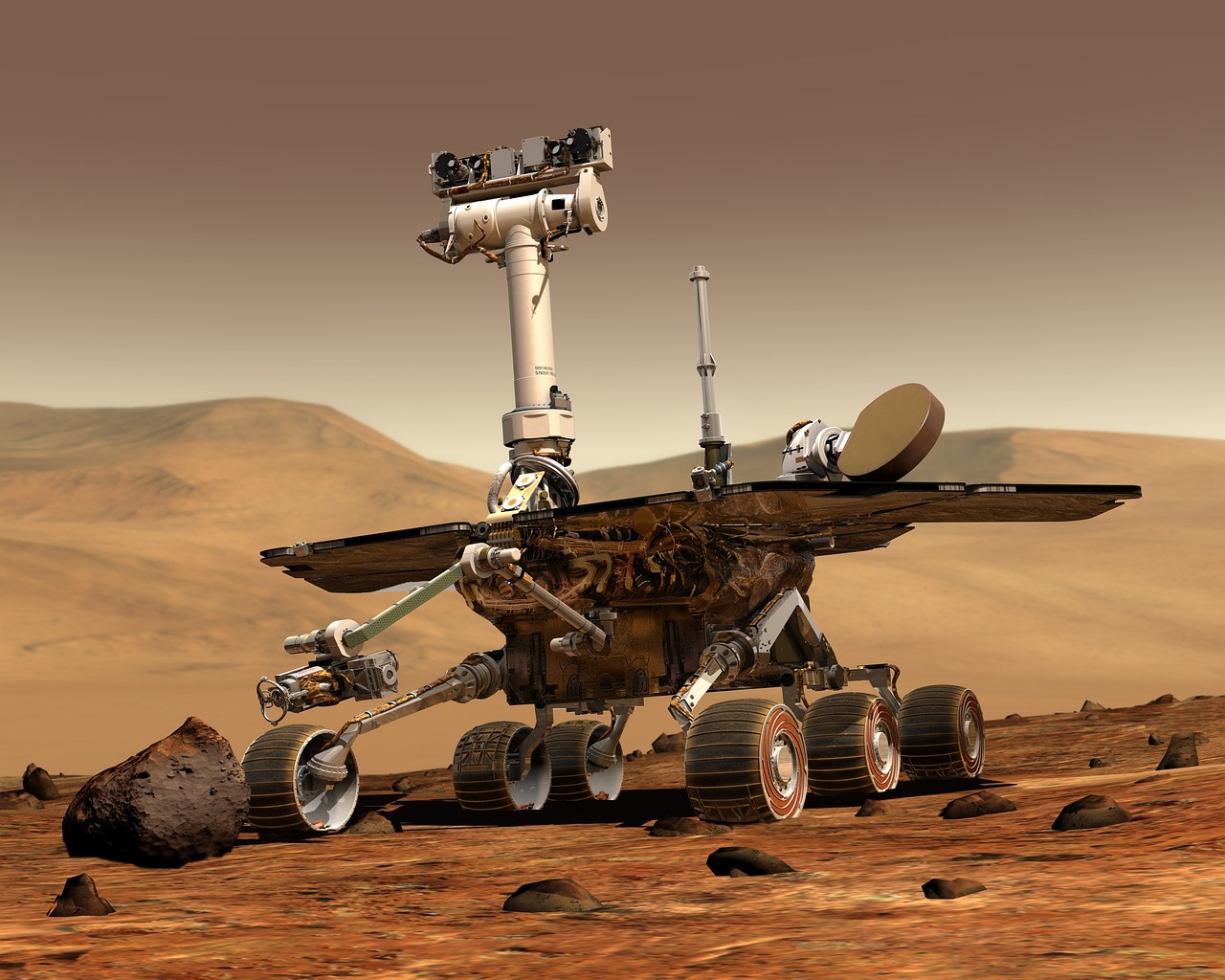
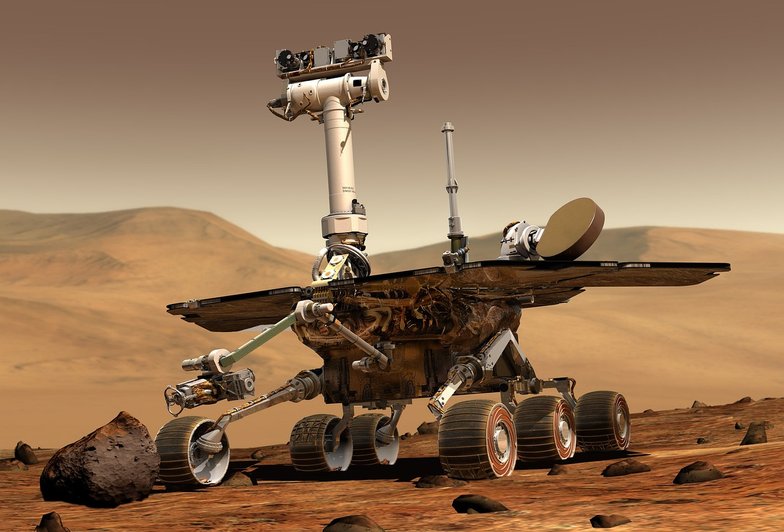
Mars is the only planet we know of that is entirely inhabited by robots. Right now, a small fleet of rovers and landers sits on its surface, and several orbiters circle above it, taking pictures and sniffing the air. They send back images of red dust, sharp rocks, and a sky that looks like a faded photograph. Every few minutes, those signals travel millions of kilometers to reach us, and we answer back.
There is a strange intimacy to this. We know the shape of Martian dunes. We have heard the wind on Mars, recorded by a microphone on the Perseverance rover. We have watched dust devils spin across the surface. And yet, no human has ever stood there. Mars is close enough to study in detail and far enough that we still cannot touch it.
The Distance Problem
Depending on where the two planets are in their orbits, Mars is somewhere between 55 million and 400 million kilometers away. That range matters enormously. A signal sent from Earth takes anywhere from about 3 to 22 minutes to reach Mars. For a rover, that means it cannot be driven in real time. Engineers have to plan commands in advance, send them, and wait. The rover does not get to ask questions.
For a human crew, the delay would be far more serious. A conversation with mission control would become a series of long pauses. An emergency would unfold without any real-time help. Astronauts would have to be trained to solve problems entirely on their own, because the nearest help would be at least a few minutes away — and in a crisis, that is an eternity.
What We Keep Learning
The more we study Mars, the more it looks like a place that once had water, an atmosphere, and possibly the conditions for life. Rovers have found ancient riverbeds, minerals that form only in water, and organic molecules. None of this proves that life ever existed there, but it makes the question harder to ignore. If Mars was once habitable, why is it now a cold desert? And if life did start there, could it still be hiding underground?
These questions are the reason we keep going back. Mars is not just a destination; it is a mirror. Every discovery about its past forces us to reconsider our own planet's future. It is close enough to reach with our machines and far enough to remind us that space is not a small place. Mars will not be conquered anytime soon. It will be studied, questioned, and slowly understood — one signal at a time.






Mars is the most reachable planet in our solar system, and yet every mission to it reminds us how far away it really is.
A rocket launch is not just an engineering feat; it is a moment when thousands of people collectively hold their breath.
The James Webb Space Telescope has given us images of deep time, and each one is a reminder that we are looking backward into the universe's childhood.
Space is empty, cold, and silent — and yet, for many people, looking up at it is one of the most grounding experiences there is.
Astronauts describe a profound shift in perspective when they see Earth from orbit — here's what that transformation actually feels like and why it matters for the rest of us.