





The Real Talk on iGaming: Slots, Poker, and Betting in 2024
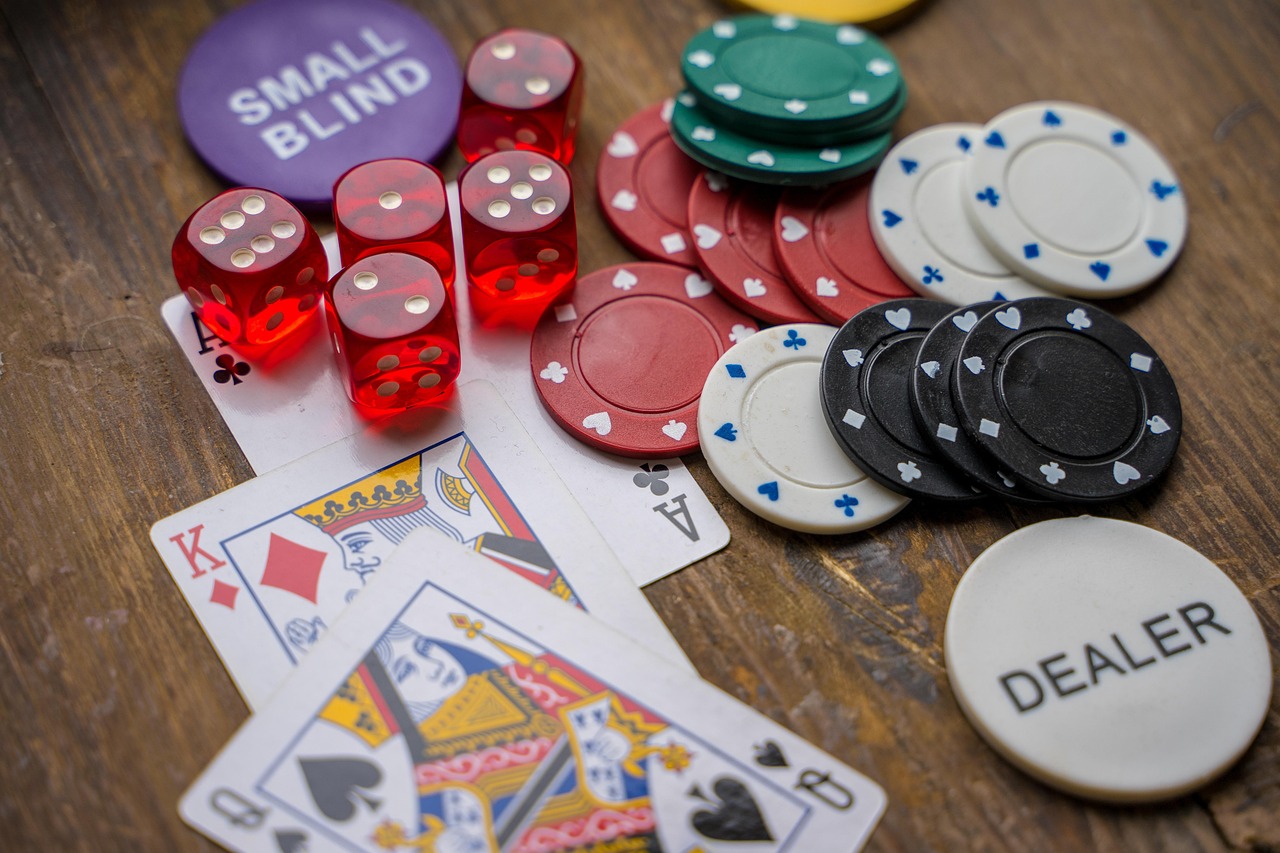
Let’s be honest: the online gambling world is a noisy place. Everywhere you look, there’s a flashy new casino promising millionaire spins, or a poker room claiming to have the softest tables since 2003. But if you strip away the neon and the bonus banners, what actually separates a fun, sustainable hobby from a frustrating money pit? I’ve spent the last decade grinding micro-stakes poker, testing slot volatility, and dabbling in sports betting. This isn’t a get-rich-quick guide. It’s a grounded look at the iGaming landscape—what works, what doesn’t, and how to keep your head above water.
The Slot Machine Myth: Volatility Is Your Only Friend
Walk into any online casino and you’ll see thousands of slots. Most players pick games based on theme—Egyptian tombs, fruit machines, or that annoying leprechaun. That’s fine for entertainment, but if you care about your bankroll, you need to understand volatility and RTP (Return to Player).
RTP is the theoretical percentage of all wagered money a slot pays back over millions of spins. A 96% RTP game is better than a 94% one, obviously. But here’s the catch: high RTP often pairs with low volatility, meaning you get frequent but tiny wins. Low RTP slots often have massive jackpots but will drain your balance faster than a leaky bucket.
Concrete example: Book of Dead (Play’n GO) has an RTP of 96.21% and extreme volatility. You might spin 200 times without a bonus, then hit a 500x win. Meanwhile, Starburst (NetEnt) has a 96.09% RTP but low volatility—you’ll get frequent 2x or 5x wins, but rarely more. Which is better? Neither. It depends on your goal. If you want a long session on a small budget, pick low volatility. If you’re chasing a big score, high volatility is your only path, but accept that most sessions end in ruin.
- Tip: Always check the RTP in the game’s info screen. Anything below 95% is a red flag for casual play.
- Data point: The average online slot RTP is around 96%, but some progressive jackpots drop to 88% or lower. Those mega-jackpots come at a cost.
Poker: Where Skill Actually Matters (But Variance Still Bites)
Unlike slots, poker is a game of decisions, not random number generators. But don’t let that fool you into thinking it’s a steady paycheck. I’ve had months where I crushed $1/$2 No-Limit Hold’em for 10 buy-ins, then lost 15 buy-ins in a week due to coolers and bad beats. Variance is brutal, even for pros. สล็อตเว็บตรง offers a practical breakdown of the topic.
If you’re new to online poker, start with micro-stakes ($0.01/$0.02) and focus on one format. Cash games, sit-and-gos, or multi-table tournaments (MTTs) each require different skill sets. Cash games reward patience and hand reading. MTTs reward aggression and push-fold math near the bubble. Pick one and study it.
Concrete tip: Track every session. I use a simple spreadsheet: buy-in, cash-out, hours played, and notes on key hands. After 10,000 hands, you’ll see patterns—like whether you’re losing money from the big blind or playing too many suited connectors out of position. That data is worth more than any $50 course.
Also, beware of the “rake trap.” Online poker rooms take a cut of every pot (usually 5% up to $3). At micro-stakes, that rake can eat 10-15% of your winnings. It’s almost impossible to beat low-stakes cash games without a rakeback deal or bonus. So either move up to stakes where rake matters less, or play tournaments where the fee is fixed.
Sports Betting: The Margin Is Not Your Friend
Sports betting has exploded in the US, and for good reason—it’s fun to sweat a game with action on it. But the math is stacked against you. Bookmakers build a margin (the vig) into every line. A standard -110 line on both sides means you need to win 52.4% of your bets just to break even. That’s a razor-thin edge over a coin flip.
If you want to bet sports seriously, forget parlay lotteries. Focus on one or two leagues you actually watch. Line shopping is essential—different books offer different odds on the same game. Getting -105 instead of -110 on 100 bets saves you $50 per $100 wagered. Over a season, that’s real money.
Another trap: live betting. It feels exciting, but the odds shift faster than you can think. I’ve seen people chase losses by betting on the next corner kick or free throw. That’s not investing; that’s gambling on adrenaline. Set a hard limit per day and stick to pre-match bets if you lack discipline.
- Example: A $100 bet on a -110 line returns $90.91 profit. A $100 bet on a -105 line returns $95.24. Small difference, huge impact over 500 bets.
- Rule of thumb: Never bet more than 1-2% of your bankroll on a single game. Even the best handicappers lose 40% of the time.
Bonuses and Promotions: Read the Fine Print or Get Burned
Every casino and sportsbook waves a welcome bonus in your face. “100% up to $500!” sounds amazing until you read the wagering requirement: 40x the bonus amount, and slots only count 20% toward clearing it. Suddenly, that $500 bonus requires $20,000 in spins before you can withdraw a dime.
Here’s how to evaluate a bonus:
- Wagering requirement: Lower is better. 20x is decent. 50x is predatory.
- Game weighting: Slots usually count 100%, but table games and poker often count 10% or 0%. Check the list.
- Time limit: Some bonuses expire in 7 days. If you can’t clear it, you lose the bonus and any winnings from it.
- Max cashout: A “$100 free bonus” might have a $50 max cashout. That’s not a bonus; that’s a coupon.
My advice: treat bonuses as a small edge, not a reason to deposit. If you were going to play anyway, a fair bonus (30x or less, no max cashout) is fine. Otherwise, skip it and play with your own money. Freedom is worth more than a locked-up $200.
Bankroll Management: The Only Golden Rule
You can be the best poker player or slot strategist in the world, but if you don’t manage your bankroll, you’ll go broke. I’ve seen it a hundred times. A friend of mine won a $5,000 slot jackpot, then blew it all in two days on $10 spins because he felt “invincible.”
Here’s a simple framework:
- Slots: Bankroll = 200x your average bet. If you bet $1 per spin, you need $200. That gives you enough spins to survive variance.
- Poker cash games: Bankroll = 20 buy-ins for your stake. At $0.05/$0.10, a buy-in is $10, so you need $200. At $1/$2, you need $4,000.
- Sports betting: Bankroll = 100 units. If a unit is $10, your bankroll is $1,000. Never bet more than 2 units on a single game.
- Tournaments: Bankroll = 50-100 buy-ins. A $10 MTT requires $500 to $1,000.
And here’s the hard part: if you lose 50% of your bankroll, drop down in stakes. Ego kills more bankrolls than bad luck. Swallow your pride, move to lower limits, and grind it back. The games will still be there tomorrow.
The Bottom Line: Entertainment First, Profit Second
After all the strategy, the RTP charts, and the rake calculations, iGaming is still gambling. The house has an edge. The rake takes a cut. Variance will punch you in the gut. If you’re playing to make a living, you’re competing against sharks, bots, and mathematical certainties. That’s not a recipe for a relaxed hobby.
But if you treat it as entertainment—the same way you’d pay for a movie ticket or a round of golf—then it can be genuinely fun. Set a budget you’re comfortable losing. Stick to games you understand. Take breaks. And never, ever chase a loss. The moment you’re playing to get even is the moment you’ve stopped playing a game and started feeding a machine.
So, pick your poison. Spin the slots for the thrill, grind the poker tables for the mental challenge, or sweat a Sunday parlay for the camaraderie. Just do it with open eyes and a closed wallet when the fun stops. That’s the only real edge you’ll ever have.







Astronauts describe a profound shift in perspective when they see Earth from orbit — here's what that transformation actually feels like and why it matters for the rest of us.
In 1990, Voyager 1 turned around and took a picture that Carl Sagan said should be seared into our minds — here's the story behind the most humbling image ever made.
The universe is vast and old, so where is everybody? The Fermi paradox remains one of the most unsettling questions in modern science.
Long-duration spaceflight is as much a psychological challenge as a physical one — here's how crews prepare for months of confinement, distance, and silence.
Light pollution has erased the Milky Way for most of the world's population, and the loss is about more than just stargazing.